Concept example
Margaret’s Circle.
A family Circle about one woman, used in the room with her, with one carer invited to help. Parts of what this page describes are not built yet, and it says which.
This is a concept example, and parts of it are not built yet
Margaret, Susan, Tom and Bev do not exist. The people, names and pictures were created for this site. Nothing here is a customer and none of the pictures shows a real person or a real care home.
It is labelled a concept rather than an illustration because the workflow it describes needs capabilities Cirluma does not have yet: a way of recording that the person being recorded agreed to it, a process for when somebody cannot give that agreement themselves, and any particular handling for sensitive information. Those three are named in full further down this page, in the table that says which parts are built.
Nothing on this page is legal advice, and none of it is a claim that Cirluma meets any regulatory standard. A care provider’s obligations under the Health and Social Care Act regulations, the Mental Capacity Act 2005 and UK data protection law remain the provider’s own, and a family or a provider considering anything like this should take its own advice first.
Margaret is eighty-seven, and nobody wrote any of it down.
She moved into a home in the spring. Two shoeboxes of loose prints came with her and most of them have nothing on the back. Her daughter Susan can name perhaps a third of the people in them. Her grandson Tom lives in Lisbon and sees her twice a year.
The person who can name the rest is sitting in the room with them, and the visits are an hour long, and an hour is not very much when nobody has thought of a question in advance.
What the family wanted was not a system. It was a reason to sit down with the pictures, somewhere for what Margaret says to go, and a way for Tom to be part of a conversation happening two thousand kilometres away.
What this is not.
- It is not a care record. Nothing here belongs in a care plan, and nothing in a care plan belongs here. Cirluma holds a family’s photos and stories, and is not clinical documentation of any kind.
- It is not monitoring. There is no camera, no microphone that listens on its own, no continuous recording, no alerts and nothing running while nobody is in the room. A recording happens because a person presses a button, in front of the person being recorded, and stops when they press it again.
- It is not the home’s Circle.Susan owns it. Bev was invited by Susan as an individual, for the sessions the family asked for, and Susan can remove her at any time without asking anybody.
- It is not a substitute for a visit.Every session on this page is somebody sitting in a chair next to Margaret. The product is where what she said goes afterwards.
Four people, one of them the subject.
Margaret is a viewer, which in this Circle is the right role rather than a lesser one: she looks, listens and comments, and everything she contributes she contributes by talking.
Susan
Margaret’s daughter, 58.
Opened the Circle and pays for it. She is the only person who can invite anyone, change what a member can do, or remove somebody.
Owner
Margaret
The Circle is about her. She is 87.
Looks, listens and comments. She has never uploaded anything and does not want to. What she contributes, she says out loud.
Viewer
Tom
Margaret’s grandson, in Lisbon.
Adds present-day pictures of his own life, and asks the questions that turn out to be the ones nobody had asked.
Contributor
Bev
A care worker at the home.
Invited by Susan, for the sessions the family asked for. Writes down what Margaret says, in Margaret’s words, under her own name.
Contributor
What was scattered.
Not across devices, in this one. Across a loft, a country and one person’s memory.
Two shoeboxes of loose prints, one album with the corners come unstuck, and a wedding picture nobody could date. Almost nothing is written on the backs.
Susan’s own pictures of the same family are on a phone. Tom’s are in Lisbon. Margaret’s brother’s widow has a box of her own that nobody has seen since 2009.
And the names, the dates and the reason anyone was standing where they were standing, which exist in one place only and are not written down anywhere at all.
How the record grew.
Six months, and no project plan. Each entry is somebody adding one thing.
March
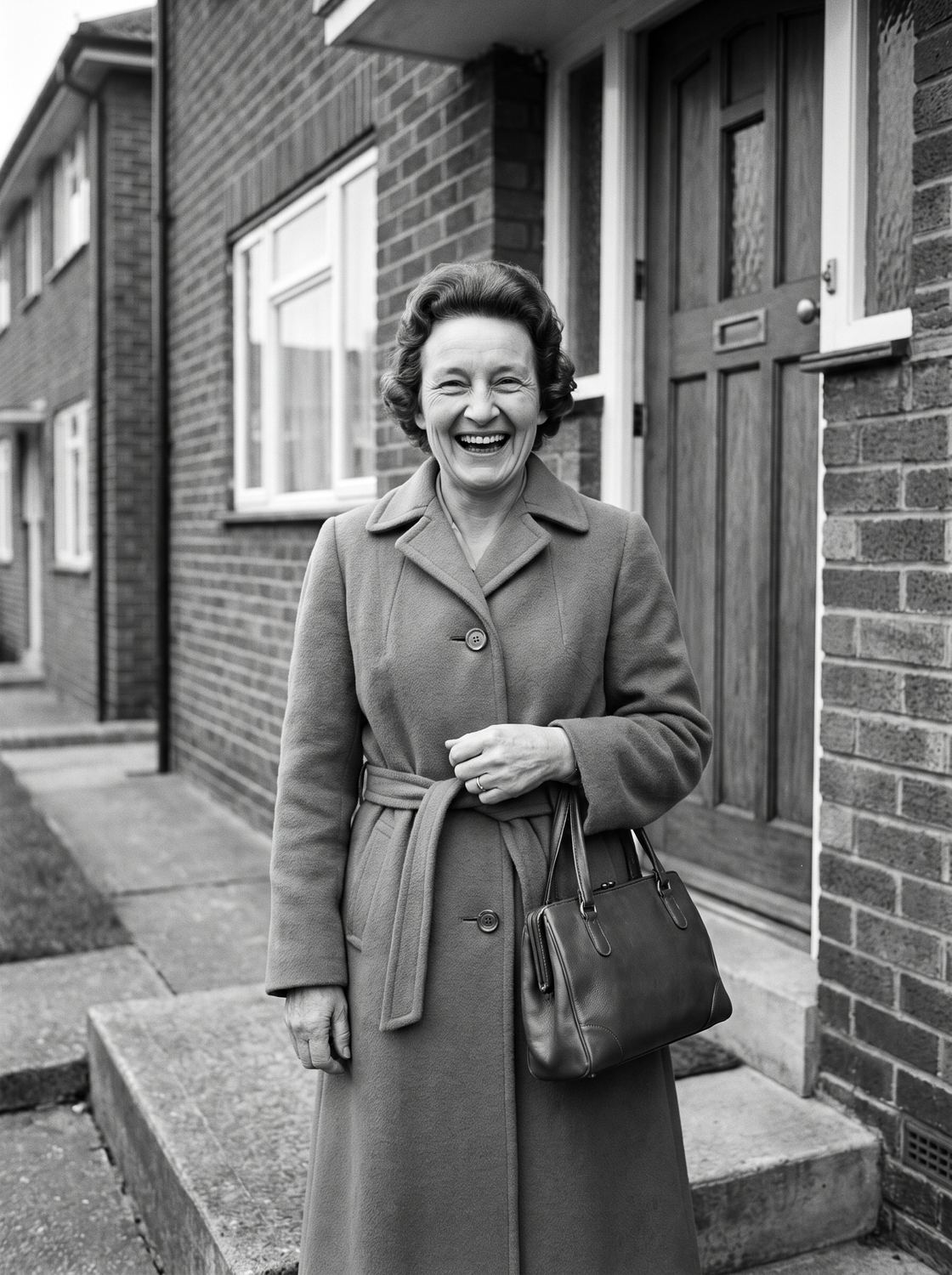
Susan opens the Circle with two shoeboxes of loose prints she took out of the loft when Margaret moved. Most of them have nothing written on the back.
April
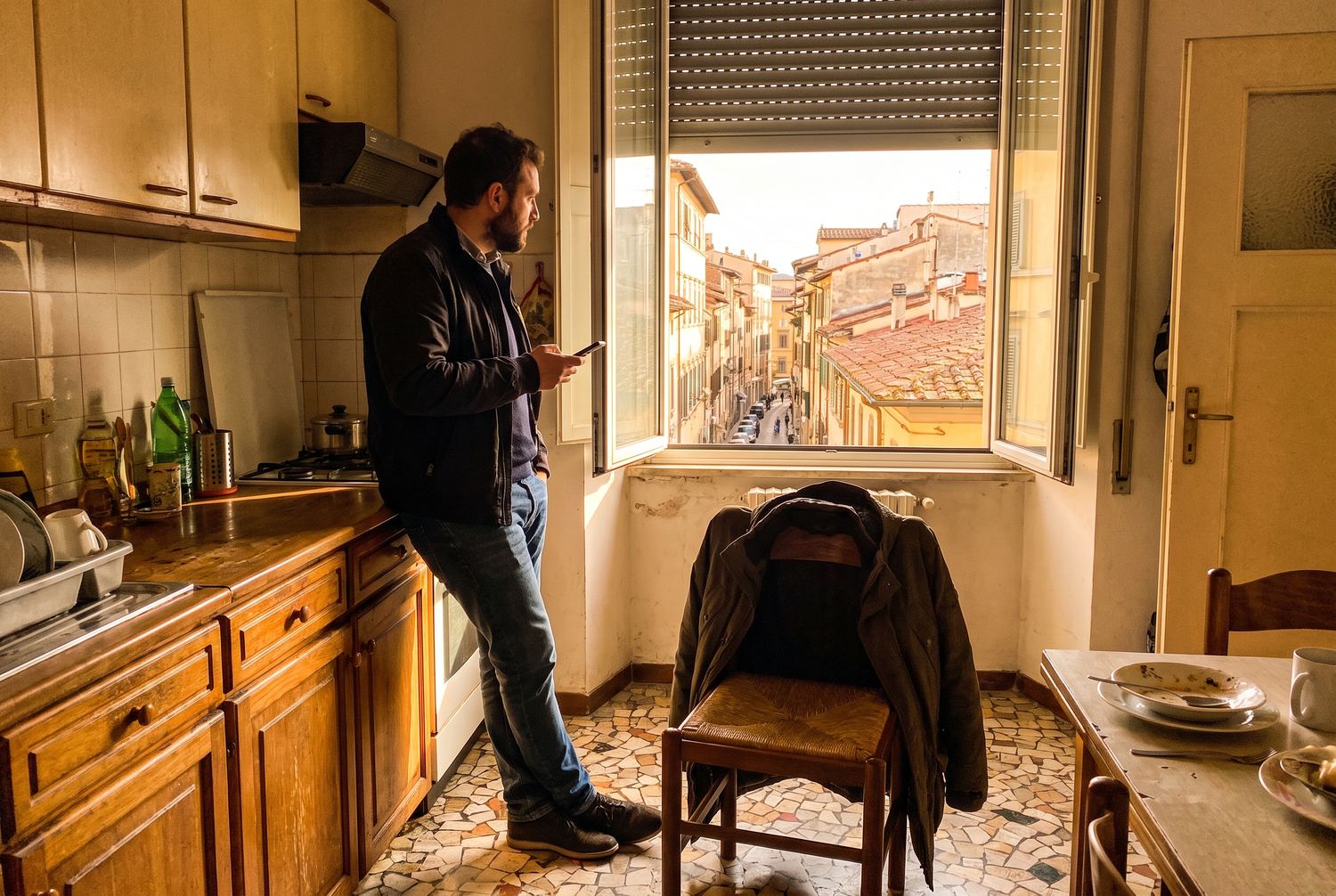
Tom starts adding from Lisbon: his flat, his walk to work, the market on a Saturday. Margaret has never seen where he lives. It turns out to be the thing she comments on most.
May
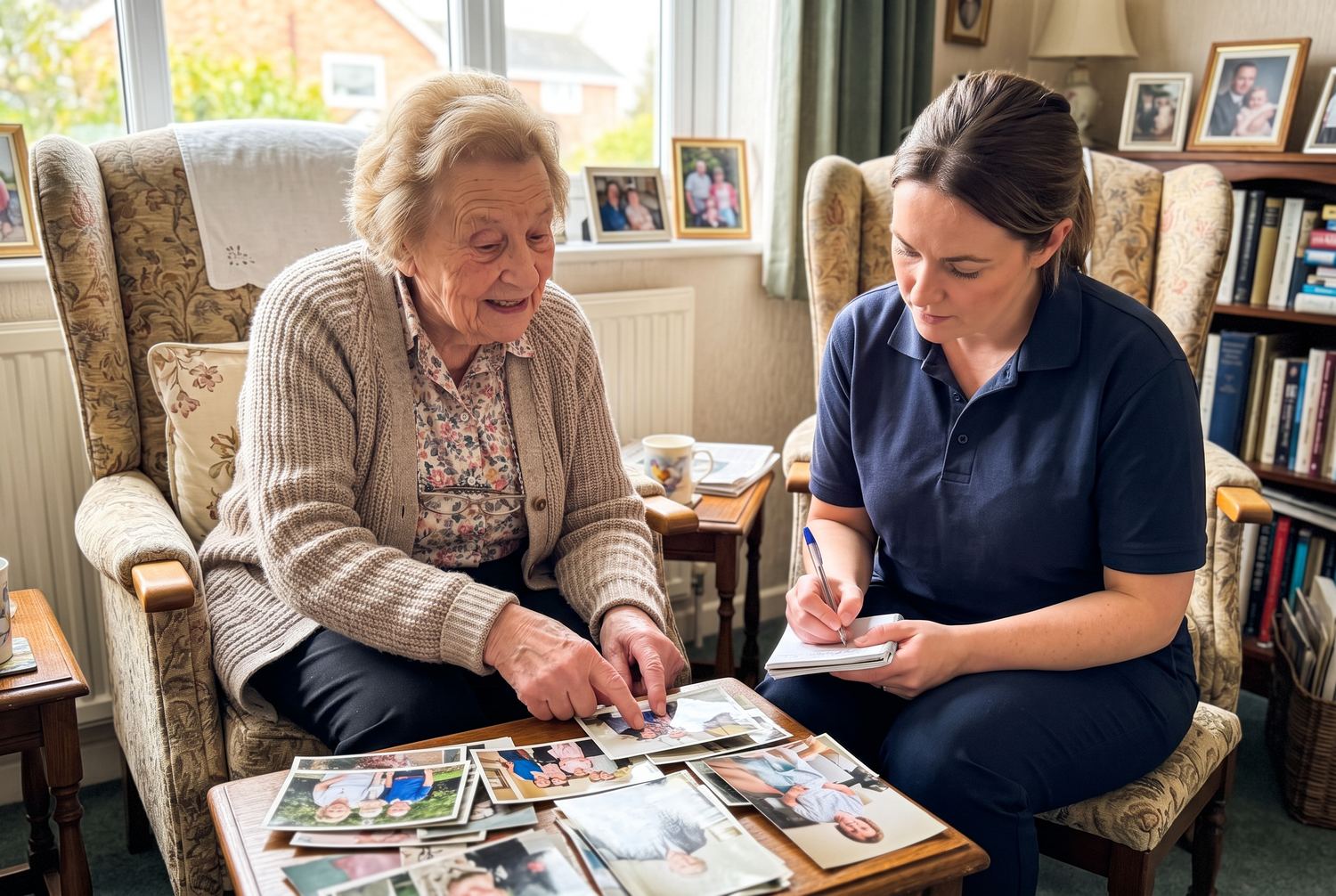
Susan asks the home whether somebody could sit with Margaret and the pictures now and then. Bev is invited into the Circle for that, and for nothing else.
July
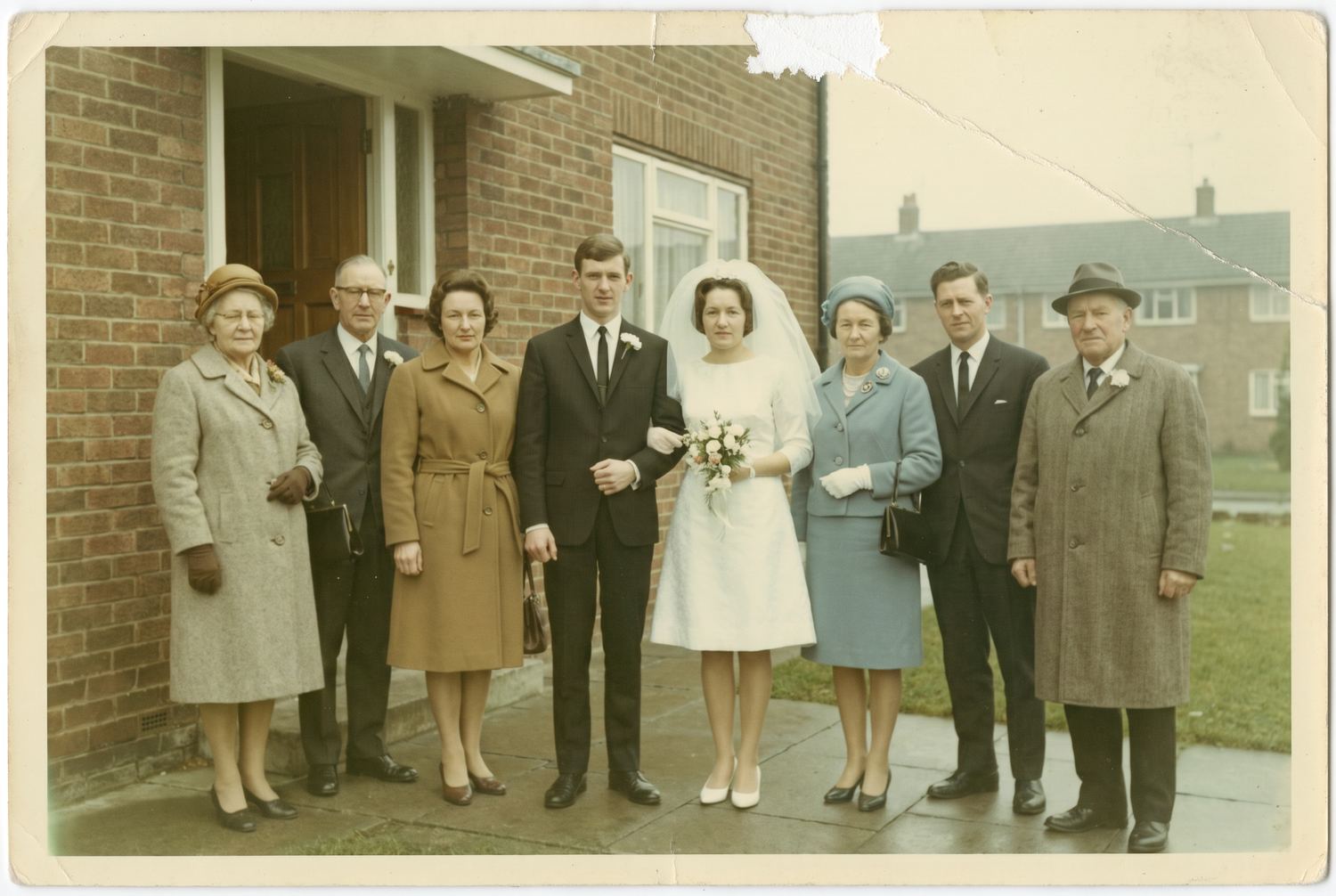
The wedding picture, which nobody could date, turns out to be 1966 and not 1968, because Margaret remembers what the weather did. Eight people in it now have names.
September
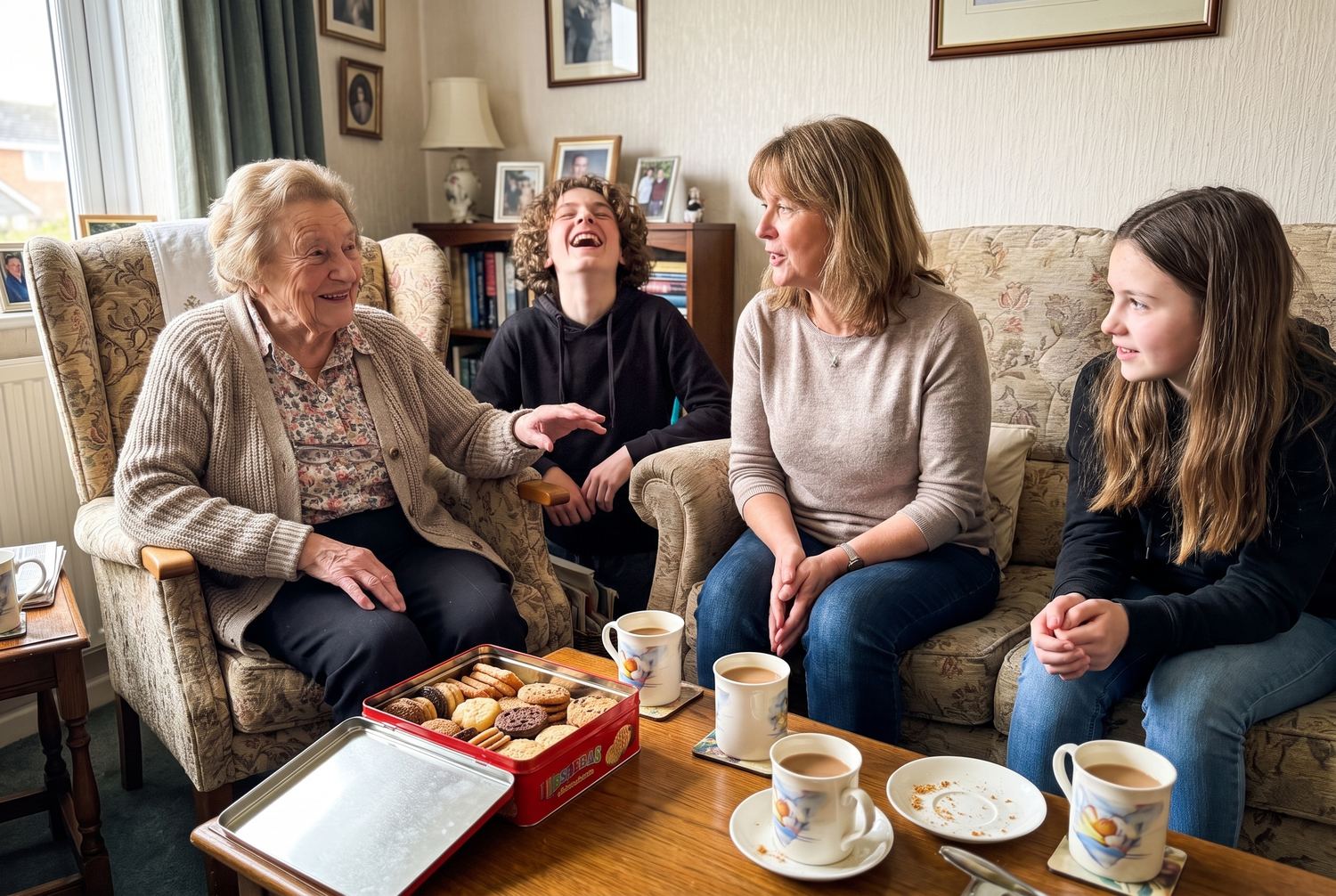
Susan and the grandchildren visit and go through the last of the loose prints together, in the room, out loud. The Circle is the reason they have something to do with their hands.
What Bev does, and what she does not.
A carer in a Circle is a contributor with a name on everything they add. The distinction that matters is between writing down what somebody said and speaking for them.
She does
- Sit with Margaret and the pictures, for half an hour, when the family has asked for it and Margaret wants to.
- Write down what Margaret says about a picture, as close to Margaret’s own words as she can get, and put her own name on it as the person who wrote it.
- Record Margaret’s voice instead, where Margaret has said she would rather do it that way, with the recorder visible and running in front of her.
- Answer the questions Tom leaves on a picture, and tell the family which ones landed.
She does not
- Record anything Margaret has not been asked about, or leave anything running between sessions.
- Write anything clinical. Nothing about Margaret’s health, her care, her medication or how she is doing goes into this Circle.
- Add material of her own, or invite anybody, or decide what stays. She is a contributor, and Susan is the owner.
- Continue if Margaret says she has had enough, which she does, and which is a complete answer.
What is built, and what is not.
Seven things this workflow needs. Cirluma has four of them today. The other three are the reason this page is labelled a concept rather than an example, and they are open decisions rather than plans with dates.
| Requirement | Today | What that means |
|---|---|---|
| Explicit, recorded consent | Partly built | Consent is recorded as an event with the version of the wording that was agreed, and can be granted, updated or withdrawn, scoped to a particular photo or person. What does not exist is a consent type describing somebody agreeing to be recorded by another member. Today the only recorded acknowledgement is by the account holder doing the recording. |
| Visible indication while recording | Partly built | The recorder shows that it is listening, with a running timer and a stop control, so nobody in front of it is left wondering. It is shown on the screen of the person recording. There is no separate indication facing the person being recorded. |
| Withdrawal and deletion | Built | A consent can be withdrawn without withdrawing any other, and a deletion request has a fulfilment path behind it. Records that must not be destroyed, such as the consent history itself, are kept as a state change rather than erased. |
| Role-based access | Built | Three roles: owner, contributor, viewer. A Circle has exactly one owner, and the owner is the only member who can invite, change a role or remove anyone. |
| Removing a carer without losing what they wrote | Built | Removing a member ends their access immediately and leaves everything they contributed in place, still in their name. This is the behaviour the whole arrangement depends on, and it is the one part of it that already works exactly as described. |
| Handling of sensitive information | Not built | Nothing classifies material as health-related or gives it different retention, storage or access from anything else in a Circle. A family using Cirluma this way has to decide for itself what does not go in. |
| A process where the resident cannot consent | Not built | There is nothing in the product that models mental capacity, a best-interests decision or a legally authorised representative, and nothing that prompts anyone to consider them. The nearest thing is a family-authority declaration, and it applies only to creating a Likeness. |
Reviewed against current Information Commissioner’s Office guidance on explicit consent and special category data, and current Care Quality Commission guidance on the need for consent, the Mental Capacity Act 2005, and consent to images and recordings. Neither body has reviewed Cirluma, and nothing here is a compliance claim.
What the family got out of it.
Measured in the only way this can be measured, which is what would have been lost otherwise.
About sixty pictures now have names on the people in them, and forty have an approximate year. Almost all of that came out of Margaret in half-hour pieces, and none of it existed in June.
Tom is in it. Not visiting more, because he cannot, but present in a way that a phone call at Christmas is not. He asks a question and it is still there on the picture when somebody sits down with her.
The visits have something in them. Susan says the difference is not the record, it is having a reason to sit and go through something together rather than asking how she has been.
Privacy and permission, in this Circle.
What is true of the product today, stated separately from what this story wanted.
- Susan is the only owner. Nobody else can invite anyone, change what a member can do, or remove a member. Ownership cannot be handed to somebody else in the product, which is a real limitation for a Circle that is meant to outlast the person who opened it.
- Removing Bev ends her access at once and leaves everything she wrote in place, still credited to her. Margaret’s words do not leave with the person who wrote them down.
- A member is a member of the whole Circle. There is no way today to give somebody access to one album and not another, so what Bev can see is everything the Circle holds. That is why the family decides what goes in, before it goes in.
- Any consent that has been recorded can be withdrawn on its own, without withdrawing the others, and there is a deletion path behind a deletion request. The consent history itself is kept, as a record of what was agreed and when it stopped.
Start the one you have been meaning to start.
If somebody in your family is the only person who can name the people in the pictures, that is the thing to start with, and it does not need a carer or a care home to be worth doing.
Start with a free trial. Invitees do not need a subscription of their own.